Art for mindfulness means using a visual art process, drawing, painting, collage, clay work, as a way to anchor full, non-judgmental attention in the present moment. Research on mindfulness and visual arts engagement has found that people more involved with the visual arts score higher on standard mindfulness measures like the Freiburg Mindfulness Inventory (FMI) and the Mindful Attention Awareness Scale (MAAS).
Translation: the connection isn’t just a vibe. It’s measurable.
Art class is getting cut from schools at the exact moment mindfulness apps are topping the charts. Kind of ironic, right? We’re spending money on apps to teach us how to sit still and pay attention, while one of the original attention-training tools, a pencil and a piece of paper, keeps getting pushed out of the curriculum.
In this complete guide, you’ll get the research-backed benefits of art for mindfulness, a breakdown of what mindfulness-based art therapy actually is, a full set of mindfulness-based art therapy techniques you can try today (ranked by skill level), and a simple way to start your own practice tonight.
Key Takeaways
- Art for mindfulness = using a visual art process as a vehicle for present-moment, non-judgmental attention.
- Best backed by research: decreased anxiety/depression, better attention, flow states, stronger emotional regulation.
- Easiest entry points: watercolor wet-on-wet, neurographic art, and Zentangle (no art degree required).
- Time investment: 15–20 minutes is enough to notice a difference.
What Is Mindful Art and Its Benefits for Stress Reduction?
Art for mindfulness is the practice of engaging with a visual art process, making it or looking at it, while staying anchored in the present moment, without judging what shows up on the page. No “this looks bad,” no “I’m not an artist,” just attention on the brushstroke, the line, and the texture in front of you.
That definition matters because it strips away the pressure. You don’t need talent. You need attention. And attention is a skill, not a personality trait.
So why does this actually work? A few reasons keep showing up in the research:
- It decreases anxiety and depression symptoms. Art-making has been shown to produce statistically significant drops in both immediate (state) and longer-running (trait) anxiety, plus reductions in depression and tension — similar territory to what meditation produces.
- It builds attention and observation skills. People with more visual arts training show measurable gains in visual attention and fewer perception errors. This is the same reason medical schools and police departments now use art observation exercises to sharpen professional attention, it transfers.
- It triggers flow states. Total immersion, loss of self-consciousness, the “where did the time go” feeling, flow and mindfulness overlap almost completely, and art-making is one of the most reliable ways to get there.
- It strengthens self-regulation. Because art externalizes what’s going on internally, it gives you a low-stakes way to notice your own emotional patterns without needing to talk about them.
Here’s the part that surprised even me: in a University of Tennessee at Chattanooga thesis study on mindfulness and the visual arts, participants aged 18–25 who reported being involved with the visual arts scored significantly higher on the FMI than those who weren’t involved at all.
And 76% of art-makers surveyed said they “always” or “most of the time” felt fully consumed in the present moment while making art. That’s not a small effect. That’s most people, most of the time.
What Is Mindfulness-Based Art Therapy?
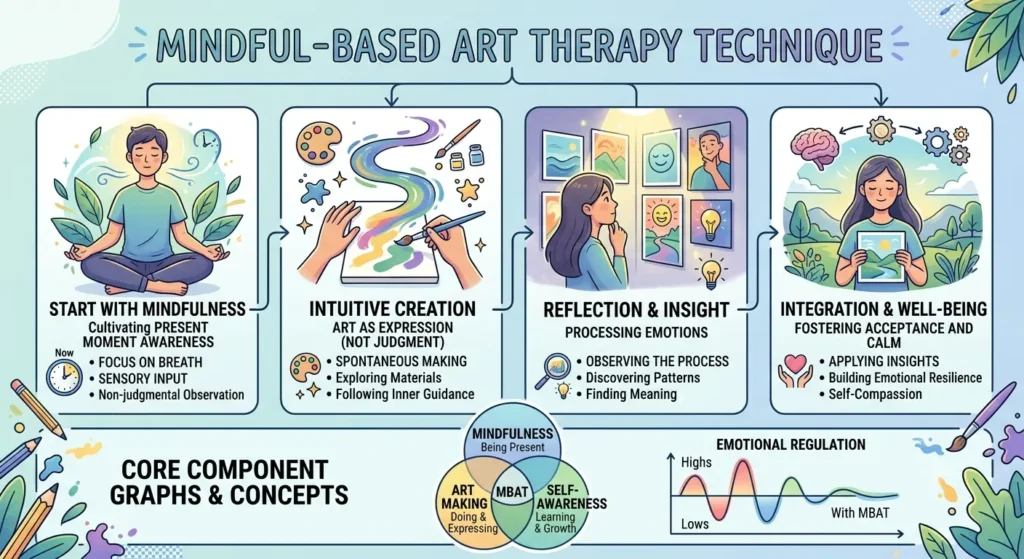
Mindfulness-based art therapy (MBAT) is a therapeutic approach that combines structured art-making with formal mindfulness training, think breathwork, body scans, and meditation, drawn largely from Jon Kabat-Zinn’s Mindfulness-Based Stress Reduction (MBSR) program.
Here’s the distinction that trips people up: regular art therapy uses art as a tool for expression, processing, or diagnosis. MBAT specifically layers in mindfulness instruction on top of the art-making. The goal isn’t just “make something that reflects how you feel,” it’s “stay anchored in present-moment awareness while you make it.”
A related exercise sometimes used inside MBAT programs is called Mindfulness Exploration of Art Materials (MEAM), where participants experiment with different art media purely to notice how each one feels, without worrying about the finished product at all.
If you’re a therapist or educator: MBAT protocols typically pair a short mindfulness induction (5–10 minutes of breath or body awareness) with an open-ended art directive, followed by group reflection, not critique, reflection. The art itself isn’t the point. The awareness you build while making it is.
Mindfulness-Based Art Therapy Techniques to Try
You don’t need a studio. Most of these need a $10 supply run at most. Here’s the full lineup of mindfulness-based art therapy techniques, then a quick breakdown of each.
| Technique | Primary Medium | Why It Works | Skill Level |
|---|---|---|---|
| Watercolor Wet-on-Wet | Watercolor paint, wet heavy cotton paper | Pigment blooms unpredictably, forcing you to release control | Beginner Friendly |
| Alcohol Ink Flow | Alcohol inks, isopropyl alcohol, Yupo paper, straw | Requires slow, controlled breath to guide ink across the surface | Beginner Friendly |
| Neurographic Art | Fine-liners, markers, paper | Rounding chaotic line intersections calms the nervous system | No Skill Required |
| Zentangle | Micron fine-liners, heavy paper tiles | Structured, repetitive patterns remove the “what do I draw” pressure | No Skill Required |
| Blind Contour Drawing | Pen, pencil, sketchbook | Hand moves at the exact speed of the eye, locking focus into real-time observation | All Levels |
| Sumi-e (Ink Wash) | Black ink, bamboo brush, rice paper | Ties breath to brushstroke; favors essence over detail | Intermediate |
| Clay Hand-Building | Air-dry clay, stoneware, natural mud | Deeply tactile; pressure and temperature engage sensory awareness | Beginner Friendly |
| Art Journaling | Mixed media, scrap paper, paint, pens | Blends unstructured writing with visual layers to process thoughts safely | No Skill Required |
Watercolor Wet-on-Wet
With Watercolor Wet-on-Wet you wet the paper first, then drop pigment onto it and just… watch. The paint blooms and bleeds on its own terms, not yours. That’s the whole exercise — learning to let go of the outcome. Good for perfectionists who need permission to lose control on purpose.
Alcohol Ink Flow
With Alcohol Ink Flow we drip alcohol ink onto non-porous Yupo paper, then use a straw to blow air and push it around. You physically cannot rush this — the breath control needed to guide the ink slows you down whether you want it to or not. Oddly meditative for something that looks like chaos.
Neurographic Art
In Neurographic Art you draw a few intersecting lines across the page, then go back and round every single sharp intersection into a smooth curve. It’s almost puzzle-like, and there’s something genuinely calming about smoothing out visual “conflict points” one at a time. Zero art experience needed.
Zentangle Art
Zentangle Art is a structured, repetitive pattern-drawing inside small tiles. The appeal is that it removes decision fatigue — you’re not asking “what should I draw,” you’re just repeating a pattern until your nervous system settles. Great for people who find open-ended prompts stressful.
Blind Contour Drawing
You draw an object (your hand, a plant, a mug) without ever looking down at the paper. Your eyes trace the object’s edge in real time while your hand tries to keep pace. It looks ridiculous on paper. It works because it makes it physically impossible to multitask or overthink.
Sumi-e (Ink Wash Painting)
Sumi-e (Ink Wash Painting) is a traditional East Asian brush-and-ink practice built around posture, breath, and a single confident stroke rather than layers of correction. It takes more practice than the others on this list, but it directly trains the breath-to-movement connection that a lot of meditation teachers try to describe in words.
Clay Hand-Building
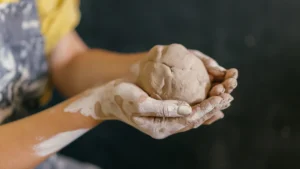
Clay Hand-Building pinch pots, coils, slabs — no wheel required. Clay is grounding in the literal sense: temperature, resistance, and pressure keep your hands (and attention) fully in the physical present. If you’re someone who spirals into thought loops, clay is often the fastest way out of your head.
Art Journaling
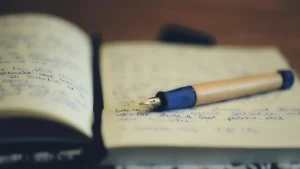
Art journaling is a mix of writing, collage, and loose mark-making in one book, with no rules about what belongs where. It’s less “art” in the traditional sense and more a safe container for whatever’s happening internally that day. No skill required, no audience, no pressure to make it presentable.
Bonus: Paper Tearing & Collage.
Paper Tearing & Collage is for you who want a ninth option. This one’s worth a mention. Tearing textured paper by hand and arranging it into a collage. The physical sound and sensation of tearing releases tension in a way that’s almost impossible to fake. No glue-gun skills required.
How to Start Your Own Art for Mindfulness Practice
You don’t need to plan a whole studio setup. Here’s the version that actually gets started tonight:
- Pick one technique from the table above based on what you already have lying around. Own markers? Start with neurographic art. Got a bar of clay from a craft drawer? Use that.
- Set a 15-minute timer. Not longer. The point is consistency, not endurance.
- Do a 60-second breath check before you start. Three slow breaths. That’s the “mindfulness” part that separates this from just doodling.
- Make the thing without narrating it. No “this is bad,” no fixing mistakes mid-process. Just notice what your hand is doing.
- When the timer goes off, stop and notice one thing: what you were feeling, what surprised you, whether your mind wandered and came back. That’s the whole reflection step.
Do that four or five times before deciding whether it “works” for you. One session tells you almost nothing. A week of 15-minute sessions tells you a lot.
In Summary
Mindfulness doesn’t have to mean a cushion and a silent room. Sometimes art for mindfulness looks like wet paint bleeding across cotton paper, or a pencil tracing the edge of your own hand without looking down.
The research keeps pointing at the same thing: visual art, done with attention instead of judgment, gets you to the same present-moment state that meditation does, just through your hands instead of your breath alone.
Pick one mindfulness-based art therapy technique from the table above, set a 15-minute timer tonight, and see what your nervous system does with it.
FAQ
Do I need to be good at art for this to work?
No. Every technique above is designed to work regardless of skill — some, like Zentangle and neurographic art, were specifically built for people with zero training.
How is art for mindfulness different from regular art therapy?
Regular art therapy uses art-making as a tool for expression or processing, often guided by a licensed therapist. Art for mindfulness and mindfulness-based art therapy specifically adds a formal mindfulness component, like breathwork or present-moment awareness, layered on top of the art-making itself.
How long should a session last?
15–20 minutes is enough to get a genuine effect. Longer sessions aren’t inherently better; consistency matters more than duration.
Can mindful art replace meditation?
It can function as one, especially for people who find seated meditation frustrating or inaccessible. The underlying mechanism, present-moment, non-judgmental attention, is the same.
Which technique is best for anxiety specifically?
Clay hand-building and watercolor wet-on-wet tend to be the most immediately calming because they’re tactile and slow-paced by nature. You physically can’t rush wet paint or wet clay.
Do I need expensive supplies to start?
No. Neurographic art needs a pen and paper. Zentangle needs a fine-liner. Blind contour needs a pencil. The pricier options (Sumi-e brushes, alcohol inks) are worth trying eventually, not on day one.
Is there research behind this, or is it just a wellness trend?
There’s a growing body of research connecting visual arts engagement to measurable increases in mindfulness scores (FMI, MAAS) and decreases in anxiety and depression symptoms. It’s still an under-researched area compared to meditation, but the existing data points consistently in the same direction.
Can kids or teens do this too?
Yes, several of these techniques (Zentangle, art journaling) are used in school-based mindfulness programs already, precisely because they don’t require any prior art instruction.
Source: Fogo, Lydia G., “Engagement with the visual arts increases mindfulness” (2017). Honors Theses.
https://scholar.utc.edu/honors-theses/106