
Sumi-e ink painting builds mindfulness by tying every brushstroke to a single breath. You can’t rush it, you can’t undo it, and you can’t overthink it without the ink telling on you. That built-in honesty is exactly why this centuries-old Japanese practice has quietly become one of the most effective ways to get out of your head and into the present moment.
If you’ve tried meditation and found it too still, sumi-e ink painting might be the version that actually sticks. It gives your mind a job: watch the ink, follow the breath, and trust the stroke instead of asking it to go blank, which, let’s be honest, almost never works.
In this guide, we’ll get into why sumi-e works as a mindfulness practice, what the research on art and present-moment awareness actually says, and then we’ll get practical: the exact supplies you need as a beginner, which paper actually behaves the way it’s supposed to, and where to find a decent brush kit without overspending on your first try.
What Is Sumi-e Ink Painting?
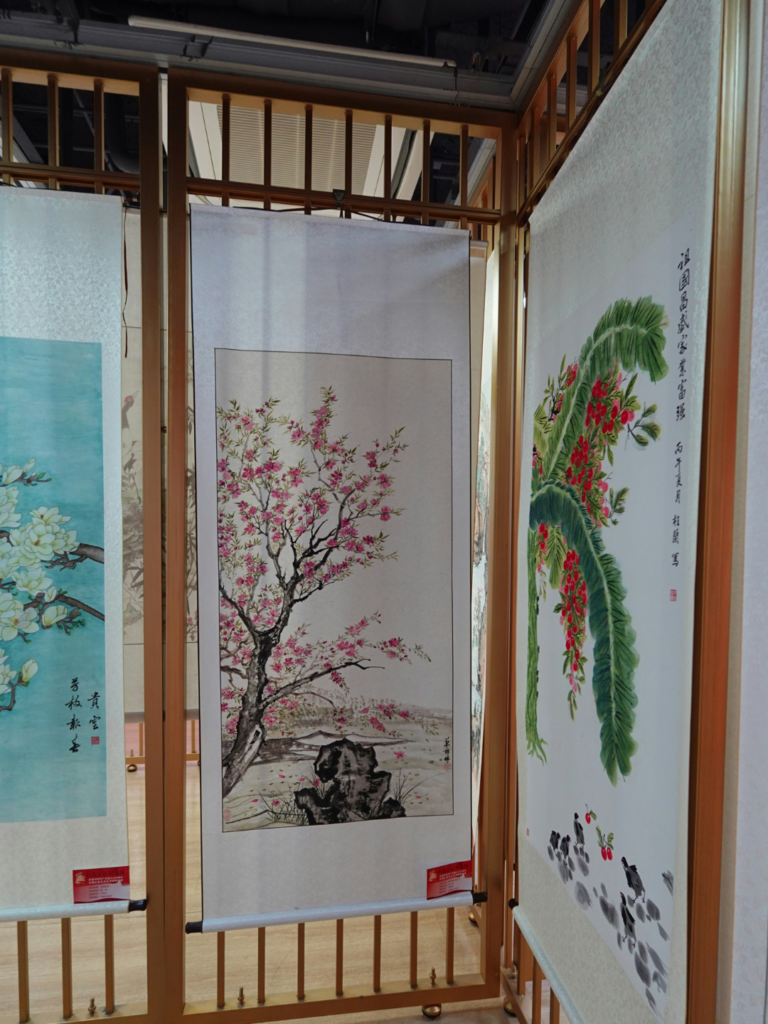
Sumi-e (墨絵, literally “ink picture”) is a Japanese ink wash painting tradition that grew out of Chinese Zen Buddhist brush painting and was adapted in Japan starting around the 14th century. Instead of color, sumi-e works entirely in black ink diluted to different values.
From near-water-pale gray to deep, saturated black, applied with a loaded brush in a small number of deliberate strokes.
The goal isn’t photographic accuracy. It’s capturing the essence of a subject: a bamboo stalk bending in wind, a single chrysanthemum, a mountain half-hidden in mist, using the fewest strokes possible.
Traditional subjects are grouped into categories like the “Four Gentlemen” (bamboo, orchid, plum blossom, and chrysanthemum), each one used historically to train specific brush skills.
Here’s the part that matters for mindfulness: because sumi ink can’t be erased or layered over cleanly, every stroke has to be intentional. You commit before you move the brush. That single constraint changes the entire experience of painting.
Why Is Sumi-e Ink Paintig So Effective for Mindfulness and Presence?
Mindfulness researchers generally describe the state as open, non-judgmental awareness of the present moment, paying attention on purpose, without getting pulled into autopilot or rumination. Sumi-e Ink Painting essentially forces that state on you, because the medium won’t let you check out.
It synchronizes breath and movement
In traditional sumi-e training, students are taught to control the brush with their breath, inhaling as they load the brush and position it, exhaling as the stroke moves across the paper. A long, controlled exhale produces a long, controlled line.
A held breath produces a shaky one. Your nervous system and your brushwork are directly connected, which is a fairly rare thing to find in a creative hobby.
This is functionally the same mechanism used in formal breath-focused mindfulness training, just applied through a brush instead of a meditation cushion.
It removes the option to overthink
One of the more consistent findings across mindfulness research is that a wandering mind, even a pleasantly wandering one, tends to correlate with lower happiness, largely because it pulls attention away from what’s actually happening right now.
Sumi-e’s single-shot, no-undo format makes wandering expensive. If your attention drifts mid-stroke, the ink shows it immediately. That immediate feedback loop keeps pulling you back to this stroke, this breath, this moment.
It’s a documented flow trigger
Flow: the psychological state Mihaly Csikszentmihalyi identified, defined by full absorption in a task, loss of self-consciousness, and a sense of effortless control , shows up repeatedly in research on art-making.
Studies on mindfulness-based art interventions describe flow as one of the primary mechanisms behind art’s calming effects, since a person fully absorbed in the process naturally lets go of self-monitoring and rumination.
Sumi-e’s demand for continuous, breath-timed attention makes it a particularly strong flow trigger compared to techniques that allow for more stopping and starting.
It rewards imperfection instead of punishing it
A pooled ink blot, an uneven line, a brush that ran drier than planned… in sumi-e, these aren’t failures. They’re often the most expressive part of the piece.
Traditional aesthetics even prize a certain roughness and spontaneity over polish. For anyone recovering from perfectionism, that’s a genuinely different relationship with “mistakes” than most creative practices offer.
What the research says (and doesn’t say)
Sumi-e itself hasn’t been the direct subject of much formal mindfulness research; it’s a narrow niche within a broader field. But it sits squarely inside the research that does exist on visual art and mindfulness.
A 2017 University of Tennessee at Chattanooga honors thesis surveying 139 adults found that people with higher engagement in the visual arts scored higher, on average, on both the Mindful Attention Awareness Scale (MAAS) and the Freiburg Mindfulness Inventory (FMI) than those with little art involvement — and 76% of the art-makers surveyed said they felt “lost” or fully consumed in the present moment most or all of the time while making art.
Separately, art therapy research has linked art-making to measurable drops in cortisol, the body’s primary stress hormone, and to activation patterns associated with present-moment sensory processing.
None of this proves sumi-e specifically outperforms other mindful art forms — that study hasn’t been done yet. What it does show is that a practice built almost entirely around breath, single-take movement, and non-judgmental acceptance of the result is about as close to a research-backed mindfulness mechanism as a paintbrush can get.
What Are the Essential Sumi-e Art Supplies for a New Student?
The good news: traditional sumi-e uses a shorter supply list than almost any other ink or paint technique. You genuinely don’t need much to start, which is part of the appeal.
| Supply | What It Does | Beginner Tip |
|---|---|---|
| Sumi ink (liquid or stick) | The core medium — black ink diluted for tonal range | Start with bottled liquid sumi ink. Grinding an ink stick on a suzuri is beautiful but adds a learning curve you don’t need on day one. |
| Suzuri (ink stone) | Used to grind an ink stick with water into liquid ink | Optional if you’re using bottled ink. Add it later once you’re hooked. |
| Sumi-e brush (fude) | A soft, absorbent brush that holds a lot of ink and tapers to a fine point | Get one medium round brush before buying a full set. Goat hair or a goat/wolf blend is a forgiving beginner choice. |
| Rice paper or practice paper | Absorbent, unsized paper that lets ink bloom and spread | Use inexpensive practice paper (often labeled “sumi-e practice paper” or newsprint-style rice paper) until your control improves — real xuan paper is for when strokes count. |
| Felt underlay (mo zhan) | A wool or felt mat placed under the paper | Protects your table and absorbs excess ink so it doesn’t bleed through. Cheap and easy to skip accidentally. Don’t. |
| Water container | For diluting ink to different values | A small dish with two or three sections is ideal so you can mix multiple gray tones at once. |
| Paperweights (bunchin) | Small weighted bars that hold thin paper flat | Two heavy objects (even smooth stones) work fine as a substitute. |
My recommendation: if you’re testing whether sumi-e is for you before investing in a full setup, a starter combo of one medium brush, a small bottle of liquid sumi ink, a pack of practice paper, and a cheap felt mat covers everything. That’s usually available bundled as a beginner kit for a modest price, and it’s enough to practice with for weeks before you’ll outgrow it.
Top-Rated Sumi-e Paper Brands for Practice
Paper matters more in sumi-e than in almost any other painting technique, because the paper’s absorbency is what creates the signature bloom and bleed of the ink.
Cheap, wrong-type paper won’t just look worse. It can make it genuinely harder to learn correct brush control, since the ink behaves unpredictably.
A few categories worth knowing before you shop:
- Xuan paper (also called rice paper or shuen paper) — the traditional Chinese/Japanese paper made from materials like mulberry bark, bamboo, or rice straw fiber. It comes in “raw” (shengxuan), which is highly absorbent and bleeds beautifully, and “sized” (shuxuan), which is less absorbent and more forgiving for beginners.
- Mulberry (kozo) paper — a Japanese-specific option, often slightly more textured and durable than standard xuan paper.
- Practice paper / “sumi-e practice paper” — a budget-friendly, less absorbent paper (sometimes newsprint-based) meant purely for repetition, not finished pieces.
When comparing brands, look for these commonly recommended options among practitioners and art educators:
| Paper Type | Good For | What to Look For |
|---|---|---|
| Raw (sheng) xuan paper | Finished pieces, experienced strokes | Soft, thin, highly absorbent sheets — often sold in bundles of 50-100 |
| Sized (shu) xuan paper | Beginners wanting more control | Slightly stiffer feel, ink stays where you put it more predictably |
| Kozo/mulberry paper | Durable practice and mixed technique work | Slightly toothier texture, holds up to repeated brush contact |
| Budget practice paper | Daily repetition drills | Thin, inexpensive, sold in large pads specifically for practice |
My recommendation: buy a pad of budget practice paper first and go through most of it before investing in a bundle of real xuan paper. The muscle memory you build on cheap paper transfers directly, and there’s no reason to “waste” good paper on your first hundred bamboo stalks.
Where to Find Sumi-e Brush Kits Online?
You don’t need a specialty import shop to get started, though they’re worth exploring once you know what you like. Realistically, beginner sumi-e brush kits show up in a few reliable places:
- General art supply retailers (like Blick Art Materials or Jerry’s Artarama) — usually carry beginner sumi-e or “Chinese/Japanese brush painting” sets that bundle a brush, ink, and paper together.
- Dedicated Asian art supply retailers — smaller online shops that specialize in sumi-e, Chinese brush painting, or calligraphy tend to carry a wider range of brush sizes and genuine xuan paper, often at better quality than generalist stores.
- Marketplace platforms (Amazon, Etsy) — good for comparing beginner kits side by side and reading reviews from other students, though quality varies a lot between sellers, so check that the listing specifies natural hair bristles rather than synthetic.
- Japanese stationery and craft retailers — some carry well-regarded brush and ink brands originally made for calligraphy, which work well for sumi-e too.
What to check before buying a kit:
- The brush uses natural hair (goat, wolf, or a blend) rather than synthetic bristle — natural hair holds and releases ink far more predictably.
- The kit includes at least one felt underlay and a small water dish, not just brush and ink.
- The paper included is labeled for ink wash or sumi-e use, not general drawing or watercolor paper.
- Reviews mention the brush holding a point well after repeated use, not fraying quickly.
How Do You Practice Sumi-e Mindfully? (Step-by-Step)
You don’t need to “add” mindfulness to sumi-e, it’s built into the process. But these steps help you actually feel it, especially in your first sessions.
- Set up without rushing. Lay your felt mat, weight your paper, and mix two or three ink dilutions in your water dish before you pick up the brush. This alone is a grounding ritual if you let it be one.
- Take three slow breaths before your first stroke. Not as a separate meditation, just to arrive in your body before you ask it to move precisely.
- Load the brush and pause. Notice the ink pulling into the bristles. This is the moment most beginners rush past.
- Inhale as you position the brush. Exhale as you make the stroke. Let the stroke last exactly as long as the exhale — no longer.
- Resist the urge to “fix” it. There’s no fixing in sumi-e. If a stroke goes sideways, that’s data for the next one, not a failure to correct.
- Notice what you notice. Some students report their mind going quiet within a few strokes. Others notice racing thoughts even more clearly at first, that’s normal, and it usually settles with repetition.
- Stop while you still want more. Sumi-e sessions of 15-20 minutes, done consistently, build the mindful habit faster than occasional two-hour sessions.
Sumi-e vs. Other Mindful Ink and Paint Techniques
If you’re deciding between sumi-e and another fluid medium, here’s how it stacks up.
| Technique | Skill Level | Core Mindful Mechanism | Best For |
|---|---|---|---|
| Sumi-e ink painting | Intermediate | Breath-stroke synchronization, no-undo commitment | People who want structure and a somatic (body-based) practice |
| Watercolor wet-on-wet | Beginner-friendly | Letting go of control as pigment blooms unpredictably | People who want a gentler entry into “controlled chaos” |
| Alcohol ink flow | Beginner-friendly | Breath used to physically move ink with air | People drawn to bold color and tactile experimentation |
| Zentangle / meditative doodling | No skill required | Repetitive, structured pattern-making | People who want zero decision fatigue |
Sumi-e sits a notch higher on the learning curve than most entries on this list, largely because brush control takes real practice.
But that same learning curve is part of why it’s such an effective mindfulness anchor. There’s enough challenge to hold your full attention, which is exactly the condition flow states need.
Common Mistakes Beginners Make With Sumi-e
- Using the wrong paper first. Practicing on regular printer paper or watercolor paper gives you false feedback, since ink behaves completely differently on non-absorbent surfaces.
- Loading too much or too little ink. Both extremes are common early on. Test the brush on scrap paper before every stroke until you can judge ink load by feel.
- Trying to “correct” a stroke mid-motion. Hesitation shows up as a wobble in the line. It’s better to finish a flawed stroke cleanly than to interrupt it.
- Skipping the felt underlay. Without it, ink bleeds through and pools unevenly, which muddies both your results and your read on your own technique.
- Treating early practice sheets as finished work. The point of early sessions is repetition, not output. Judging each sheet as a “piece” adds pressure that undercuts the mindfulness benefit.
The Bottom Line
Sumi-e works as a mindfulness practice because the medium doesn’t give you a choice: you either stay present through the stroke, or the ink shows exactly where your attention went.
That built-in accountability, paired with breath-timed movement and a tradition that treats “imperfect” as beautiful rather than wrong, makes it one of the more physically grounded paths into a mindful state.
You don’t need a full traditional setup to try it. A basic brush, a bottle of liquid ink, and a pad of practice paper is genuinely enough to find out whether this one clicks for you.
Ready to try your first mindful brushstroke? Browse our full guide to mindful art techniques to see how sumi-e compares to watercolor, alcohol ink, and other approaches.
FAQ
Is sumi-e Ink Painting hard to learn for a complete beginner?
It has a real learning curve compared to techniques like watercolor wet-on-wet or Zentangle, mostly around brush control and ink dilution. That said, the basic strokes (bamboo, orchid leaves) are taught to absolute beginners in traditional training and are approachable within a few sessions.
Do I need real rice paper to start, or can I use regular paper?
Start with inexpensive sumi-e practice paper rather than regular printer or drawing paper. Non-absorbent paper won’t let the ink bloom and spread the way it’s meant to, so you’ll be learning the wrong feedback for your brush control.
How is sumi-e different from regular ink drawing?
Regular ink drawing (like pen and ink) is usually line-based and often allows for cross-hatching, layering, and correction. Sumi-e is brush-based, tonal (built from diluted ink values, not just black lines), and generally follows a one-stroke, no-correction approach.
Can sumi-e actually reduce stress, or is that overstated?
Broader research on art-making and mindfulness has linked visual art engagement to measurable stress markers like reduced cortisol, plus higher self-reported present-moment awareness. Sumi-e Ink Painting hasn’t been isolated in its own dedicated study, but it shares the core mechanisms (breath regulation, single-focus attention, flow induction) that this research points to.
What’s the difference between sumi-e and Chinese brush painting?
They share deep historical roots and overlapping technique, but sumi-e refers specifically to the Japanese ink wash tradition, while Chinese brush painting (guohua) includes both ink-only and color work, with somewhat different stroke conventions and subject traditions.
How long should a beginner practice session be?
15-20 minutes of focused practice, done several times a week, tends to build both skill and the mindfulness habit more effectively than occasional long sessions. Shorter, consistent sessions also keep the practice from feeling like a chore.
Do I need to grind my own ink stick, or is bottled ink fine?
Bottled liquid sumi ink is completely fine for beginners and is what most practitioners recommend starting with. Grinding an ink stick on a suzuri is a meditative ritual in its own right, but it’s worth adding once you already enjoy the painting itself.
Can kids practice sumi-e for mindfulness?
Yes, with supervision around the ink (it stains) and simplified expectations. Many mindfulness-in-schools programs use simplified brush and ink exercises for exactly this reason — the breath-stroke connection is easy to explain even to younger students.